

One of the Substacks I recommend is The Dutch Investors, which writes fundamental research focused on high quality businesses. Some of their writeups are about high quality small & mid-caps that are likely of interest to Hidden Gems Investing subscribers, like a writeup on TerraVest Industries that they plan to release in November this year. I was able to get them to unlock some of their research for free below. This piece gives an you overview of three quality European compounders, all in the small & mid-cap space. I hope you enjoy it!
Chris
Hi, we’re The Dutch Investors.
The three of us share one habit: an obsession with investing to the point it has bored our partners. But a few years ago, we met and found a place to share our passions. We could (and still can) rant for hours. We founded TDI to discuss businesses, analyze stocks, learn together, and compound wealth together. Our goal is simple: to expand your investing universe.
This article introduces you to three high-quality European businesses we think are run by competent management and have sustainable competitive advantages.
Instead of giving you well-known companies, we tried to stay away from them. In this article you will not read about ASML, LVMH, or Novo Nordisk. All exceptional companies in their own right, but that’s not the goal of this exploratory article. The goal is to expand your investing universe, and we’ll do that by giving you three smaller and lesser-known companies. They all pass our quality criteria, and we either own them or they’re on our watchlist.
Let’s dive in, shall we?

TDI Idea 1: Topicus.com Inc.
Company name: Topicus.com Inc.
CAGR since IPO: ~18.5%
Market Cap: ~€5.2 billion
Revenue FY25: ~€1.55 billion
Topicus’ Story & Origin
If you don’t track niche software or serial acquirers closely, chances are small you’ve heard of Topicus. There is a small city in the Netherlands called Deventer. It is a medieval city known for its printing history and its gingerbread. What many people don’t know is that it’s home to one of Europe’s most interesting VMS serial acquirer compounding machines.
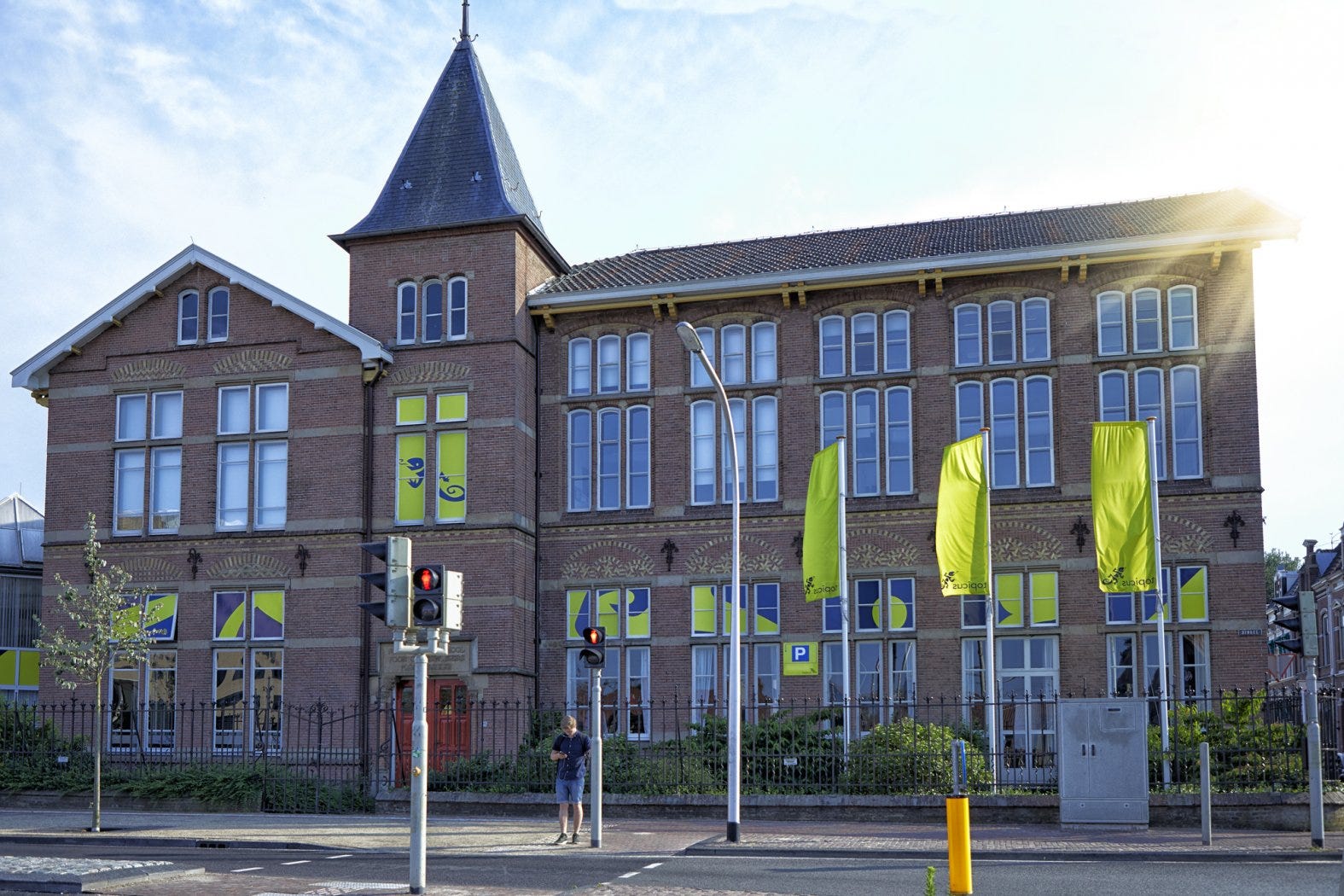
Topicus isn’t just any VMS company; it has a big brother that delivered investors great returns: Constellation Software.
The original Topicus business was founded in 1998 in Deventer by a group of entrepreneurs, including Robin van Poelje, who is still CEO to this day. The company built software solutions primarily for Dutch municipalities and educational institutions back then.
In 2021, Constellation Software acquired Topicus, merged it with its TSS (Total Specific Solutions) subsidiary, and spun it off from the mother company. The logic was straightforward: Topicus was a European-focused business, and Constellation wanted to give European investors direct exposure to a vehicle they could follow while also unleashing the management team to operate with greater autonomy.
The Business Model & Competitive Advantage
The business model is explained by Topicus as follows:
“We acquire, manage, and build vertical market software (“VMS”) businesses, primarily located in Europe. Generally, these businesses provide mission-critical software solutions that address the specific needs of our customers in particular vertical markets. Our focus on acquiring businesses with growth potential, managing them well, and then building them has allowed us to generate significant cash flows and revenue growth during the past several years.”
Like Constellation, a highly decentralized structure is adopted. It means that management teams operate independently, keeping management teams intact. Mark Leonard once stated the following:
“We are trying to take operators and convert them into capital deployers, and we hope very much that it works.“
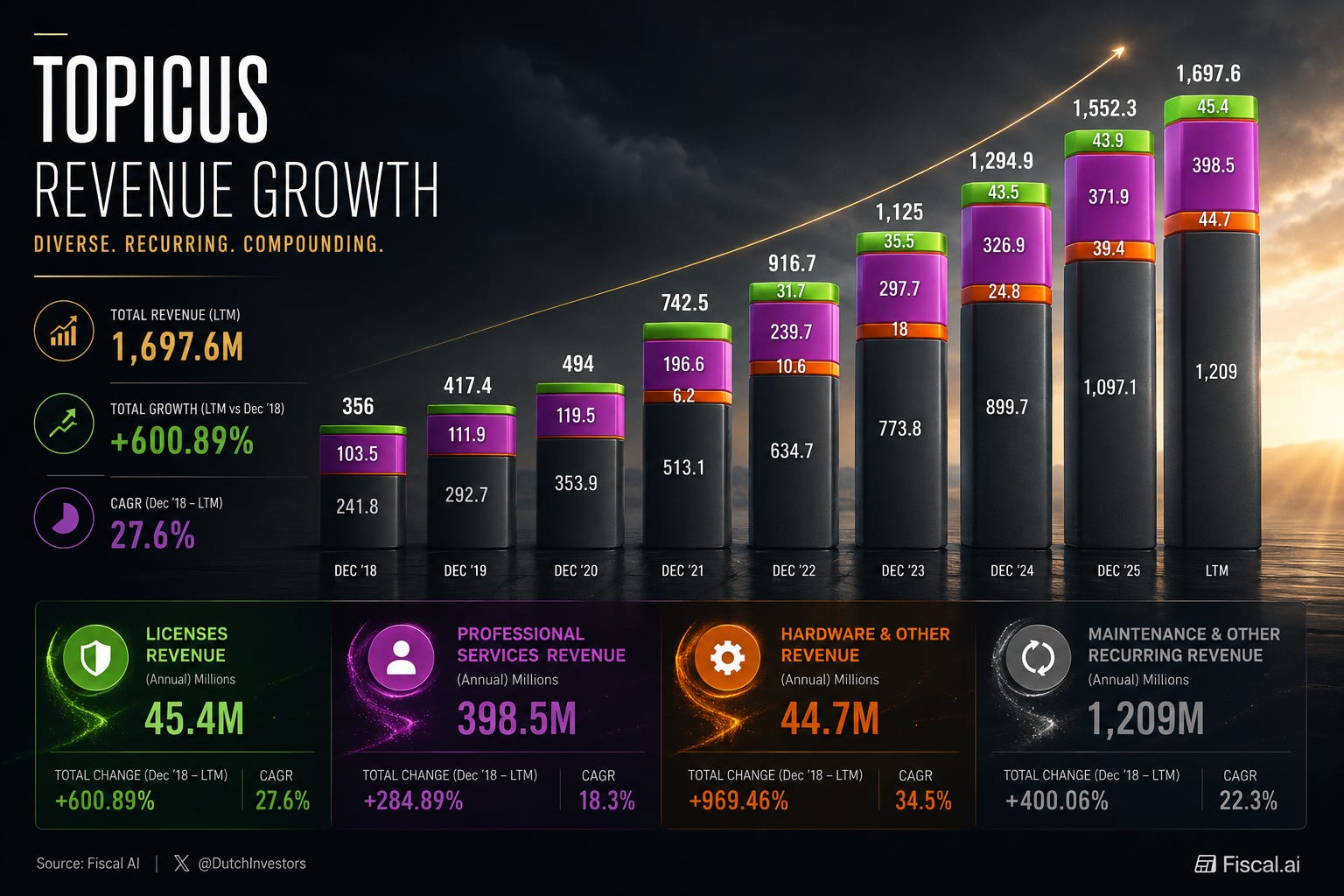
Maintenance and other recurring revenue is the crown jewel of the business model. In LTM, it contributed ~€1.2 billion, or ~71% of total revenues. Some of these are annual maintenance and support contracts, SaaS subscriptions, transaction-based income, and managed services. There is a very high rate of renewal year after year because the software is so deeply integrated into the customer’s operations.
The fact that recurring revenues are essentially assurances makes the business model especially attractive to investors. A municipality that has been using Topicus’ software to manage its permits for 15 years is not going to switch to a competitor because a salesperson offers a marginally better price. The switching costs are too high, the institutional and employee knowledge baked into the existing system is too valuable, and the operational risk of a failed migration is too big.
While the stock price is not doing great because of AI-related risks, the fundamentals still look great. We believe the moat remains powerful, with switching costs being the most powerful.
Unlike a single-product software company that must continually defend its position against substitutes, Topicus owns dozens of individual businesses, each with its moat. This diversification of switching-cost moats is what makes the business fundamentally different from owning a single SaaS company such as SAP, Salesforce, or UiPath. Besides, Topicus is protected from disruption by larger SaaS players due to the niche companies it owns.
Although not part of the traditional ‘moats, Topicus has exceptionally capable management with a sole focus on capital allocation. Which is the most important job of the CEO. We wrote an entire article on this specific topic for those interested.

Valuation & Ending Thoughts
Valuing Topicus is difficult because its complex decentralized serial-acquirer model relies heavily on continuous reinvestment that depresses short-term reported earnings. Furthermore, significant non-controlling minority interests obscure true cash attribution to common shareholders, making standard valuation multiples misleading.
We’ll do a quick and simple scenario analysis, but don’t rely too much on it. Its just to give you a rough idea of its current valuation. Some stats we considered:
Free cash flow grew at a CAGR of more than 22% since its IPO.
FCF Yield has hovered between 4.8% and 7.7% today.
Free cash flow margins hovered between 21-30%.
P/FCF has ranged between 21 and 13.
You can expect the following if you are moderately conservative in all scenarios.
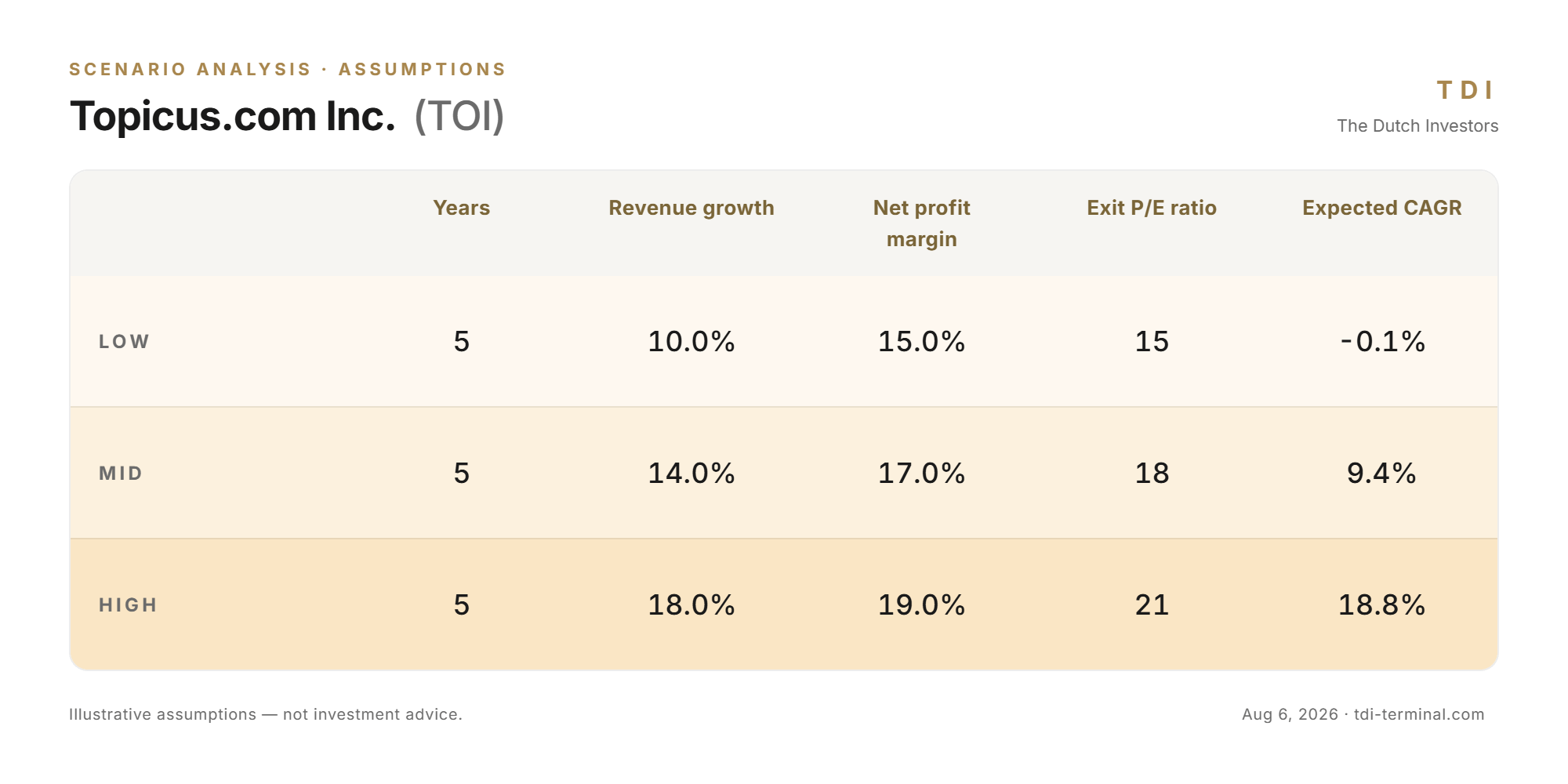
Because of the uncertainty surrounding software and AI, this company is valued much more attractively than before. It is up to you to decide what you think is most likely. Investing is about guessing the future, so any of these three scenarios could also be wrong.
It’s a great starting point, though!

TDI Idea 2: Games Workshop Group PLC
Company name: Games Workshop Group PLC
CAGR since IPO: ~17%
Market Cap: ~£6.2 billion
Revenue FY26: ~£660 million
Games Workshop’s Story & Origin
Arguably one of our favorite deep dives we’ve ever done! Just a remarkable story with exceptional economics. We have never bought the company because, for some reason, it just always seems expensive, yet always keeps going up…
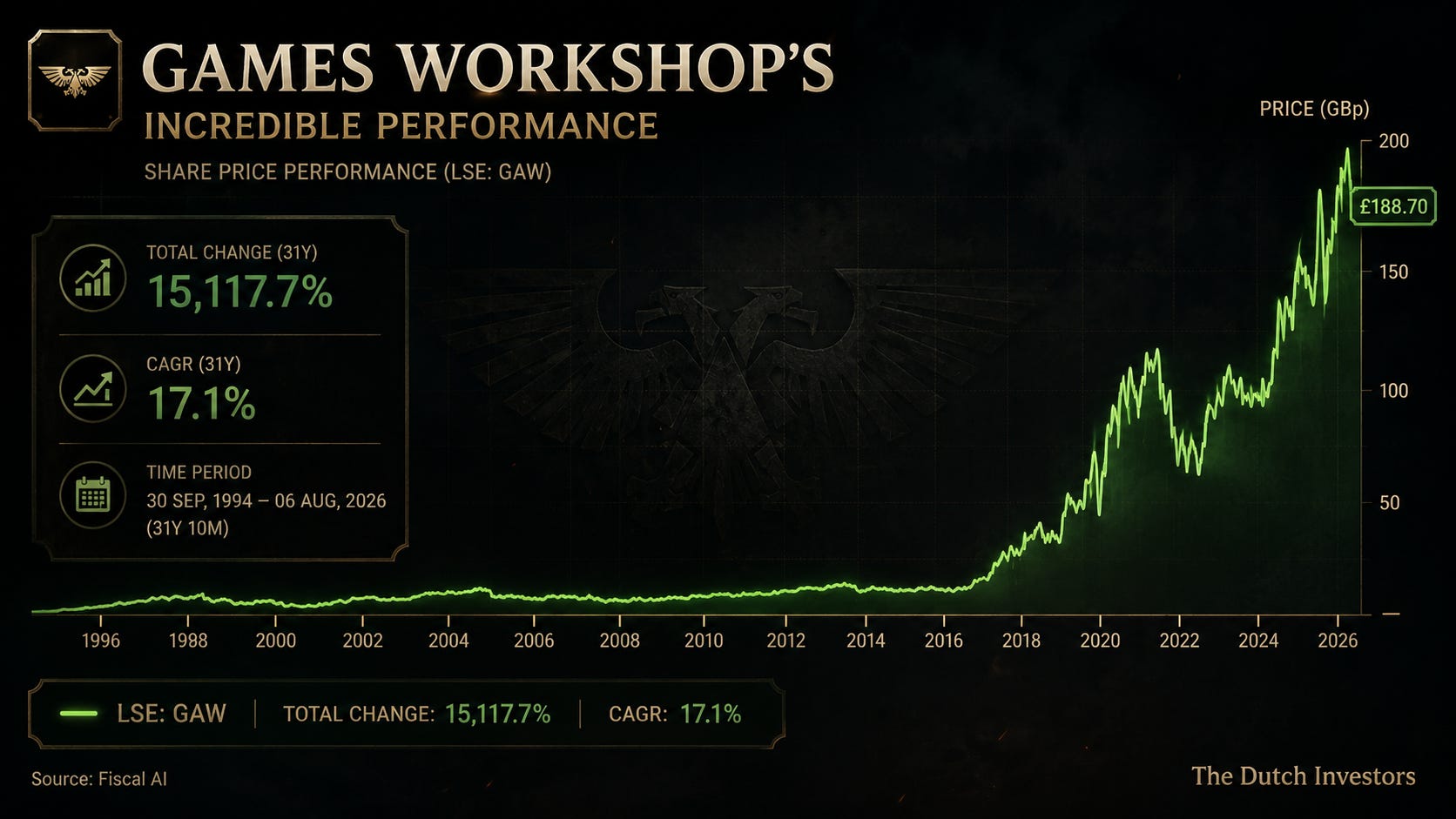
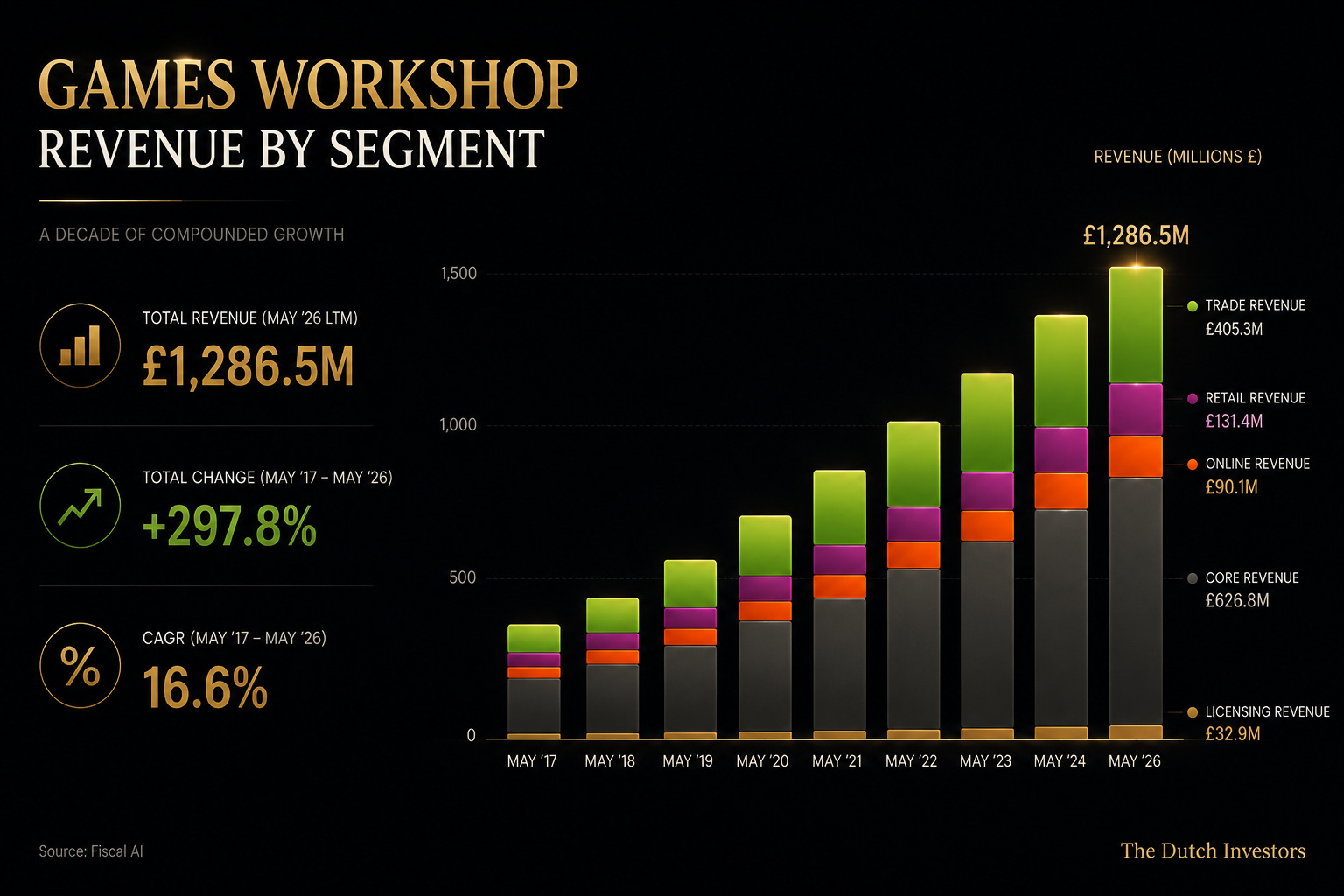
When we mention statistics like 72% gross margins, 35% free cash flow margins, and returns on invested capital of more than 81%, you don’t think of a company that makes plastic figures, right? Yet, here we are.
Games Workshop was founded in 1975 in London by Steve Jackson, John Peake, and Ian Livingstone. Initially, it started as a small-scale mail-order business for board games and tabletop RPGs, run from a bedroom. Over time, it evolved into the world’s leading manufacturer of fantasy miniatures, known for its iconic Warhammer brand. Today, Games Workshop designs, manufactures, and sells its miniatures globally, operating through a vertically integrated business model that includes in-house production, dedicated retail stores, an online marketplace, and licensing agreements.
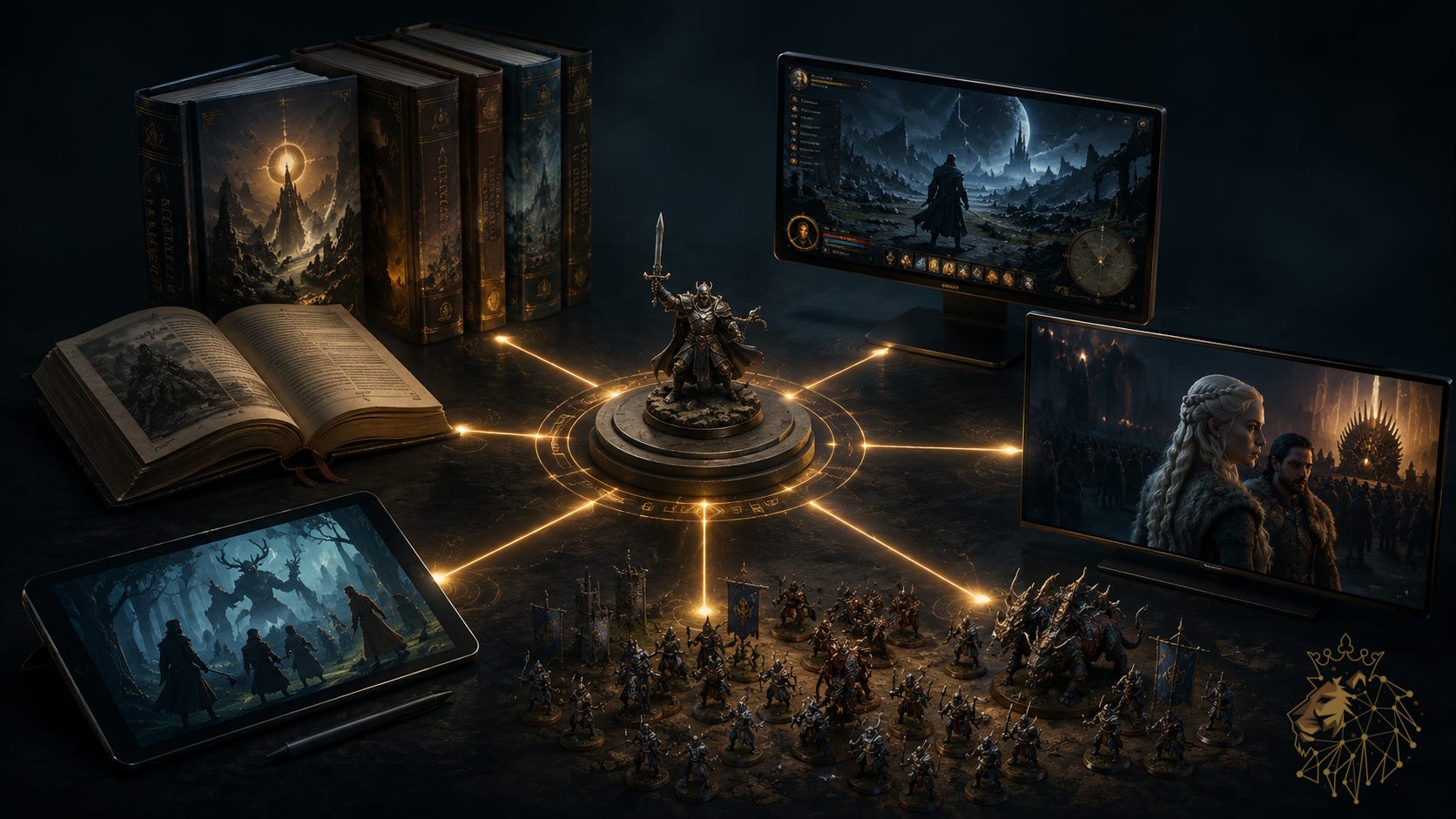
At its core, Games Workshop has built an entire ecosystem around its intellectual property (IP). Its flagship franchises, Warhammer 40,000 and Warhammer Age of Sigmar, are set in fictional universes that extend beyond physical miniatures into books, digital games, TV series, and even animated content.
The Business Model & Competitive Advantage
At its core, Games Workshop (from now on GAW) is a vertically integrated business, meaning it controls every aspect of its production, from design and manufacturing to sales and distribution.
Unlike many other toy and hobby companies that rely on third-party manufacturers and retailers, GAW does everything in-house, giving it tight control over quality, pricing, and margins.
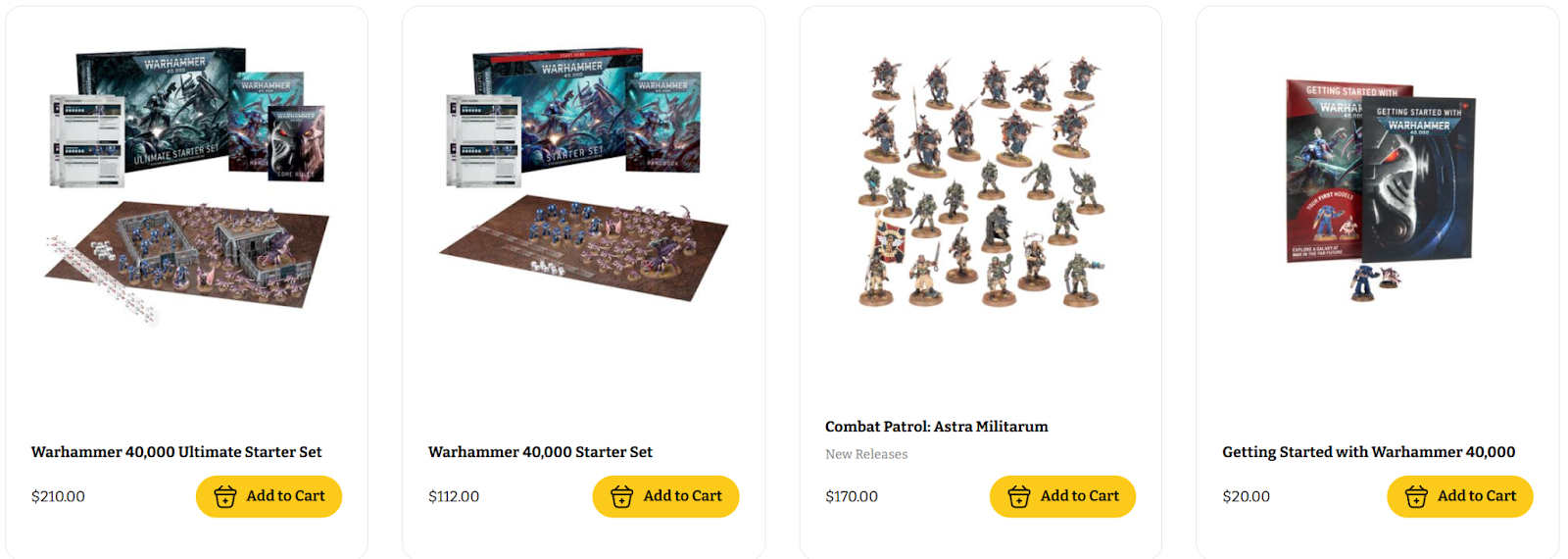
Warhammer players don’t just buy a game, play it a few times, and move on. They invest hundreds of hours and thousands of dollars into building, painting, and playing with their armies. This level of commitment creates a high barrier to entry for competitors. Once someone is deep into the Warhammer ecosystem, switching to another game isn’t just about buying new miniatures; it means leaving behind a community, a collection, and a personal investment that spans years. It operates in a highly specialized niche where no competitor matches its scale, brand loyalty, or ecosystem. While other miniature wargames exist, none have built the same dedicated player base, deep lore, or global retail presence.
It’s hard to imagine the power of this intangible asset moat, but as you know, IP can be some of the most powerful moats in the world. Just think of Nintendo or Disney, for example. In this little niche, Games Workshop has unbelievable pricing power.
Valuation & Ending Thoughts
Games Workshop has managed to reach 30%+ margins already, and based on their moat, pricing power, and future, I think this should stay stable or grow a tiny bit more. Revenue growth is a bit more tricky since GAW doesn’t give any outlook. Revenue growth is based on industry average (approx. 10%) and analyst expectations (3-15%).
Even in the more generous high scenario, an 11.8% CAGR does not scream good value to us (yet). A lot has to go right for that to happen.
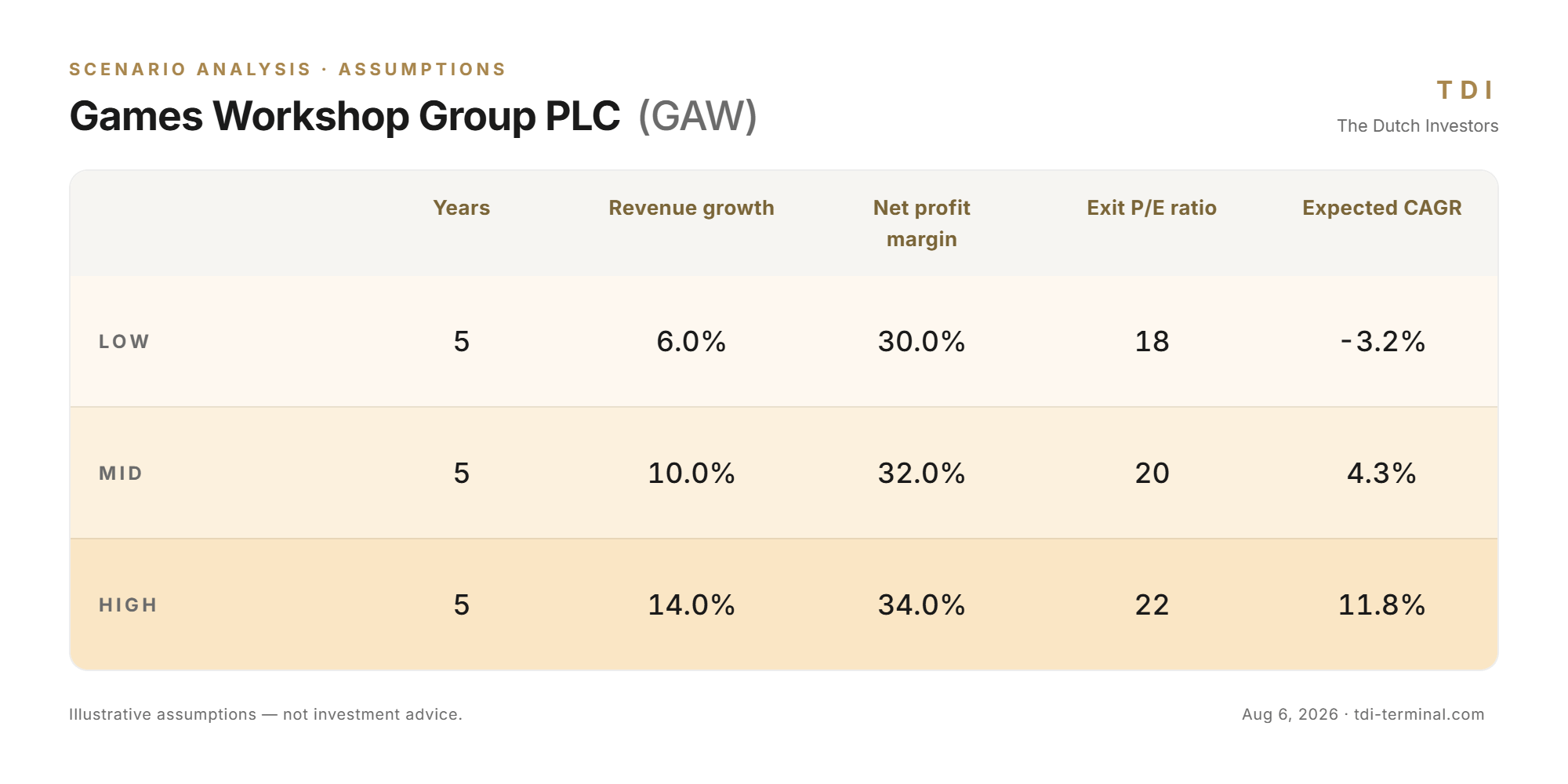
However, it’s an exceptional business protected by an impenetrable community moat, though current price levels leave a slim margin of safety. A good company to add to the watchlist perhaps?
The entire deep dive is freely available on The Dutch Investors podcast.

TDI Idea 3: Wolters Kluwer N.V.
Company name: Wolters Kluwer N.V.
CAGR since IPO: ~13.4% (Past 10-Year CAGR)
Market Cap: ~€15.5 billion
Revenue FY25: ~€6.1 billion
Wolters Kluwer’s Story & Origin
You could argue about some industries or companies being boring or not. Typically, it’s a matter of personal preference. For this exploratory report, we can safely say this company is very boring… But in a good way! Boring companies tend to outperform the broader market most of the time.
The company is worth €15 billion and is headquartered in Alphen aan den Rijn, a city surrounded by the major cities of Amsterdam, Rotterdam, Utrecht, and The Hague. The company offers data and insights to various industries, such as the healthcare sector, legal companies, and accounting.

The Business Model & Competitive Advantage
The company ‘Wolters’ started as a publisher of school books. In the ‘70s, there was intense competition within this space, which allowed for mergers. Wolters merged with its neighbor Noordhoff, literally by breaking the wall that separated the two office buildings.
In 2003, Nancy McKinstry (who is now retired) was appointed as the new CEO of Wolters Kluwer. Her strategy was simple: start focusing on publishing online/digital. Companies under the Wolters Kluwer umbrella that didn’t suit their core business anymore were immediately sold.
The business started making different kinds of acquisitions, such as accounting firms, risk management software companies for legal and healthcare, etc. With that, one could argue that Wolters Kluwer has some characteristics of a serial acquirer, although it tries to integrate some of its acquisitions.
Wolters Kluwer delivers professional information, software, and services for various industries. These include healthcare, tax and accounting, financial and corporate compliance, legal and regulatory, and corporate performance and ESG sectors. Yes, we know, quite boring for most.
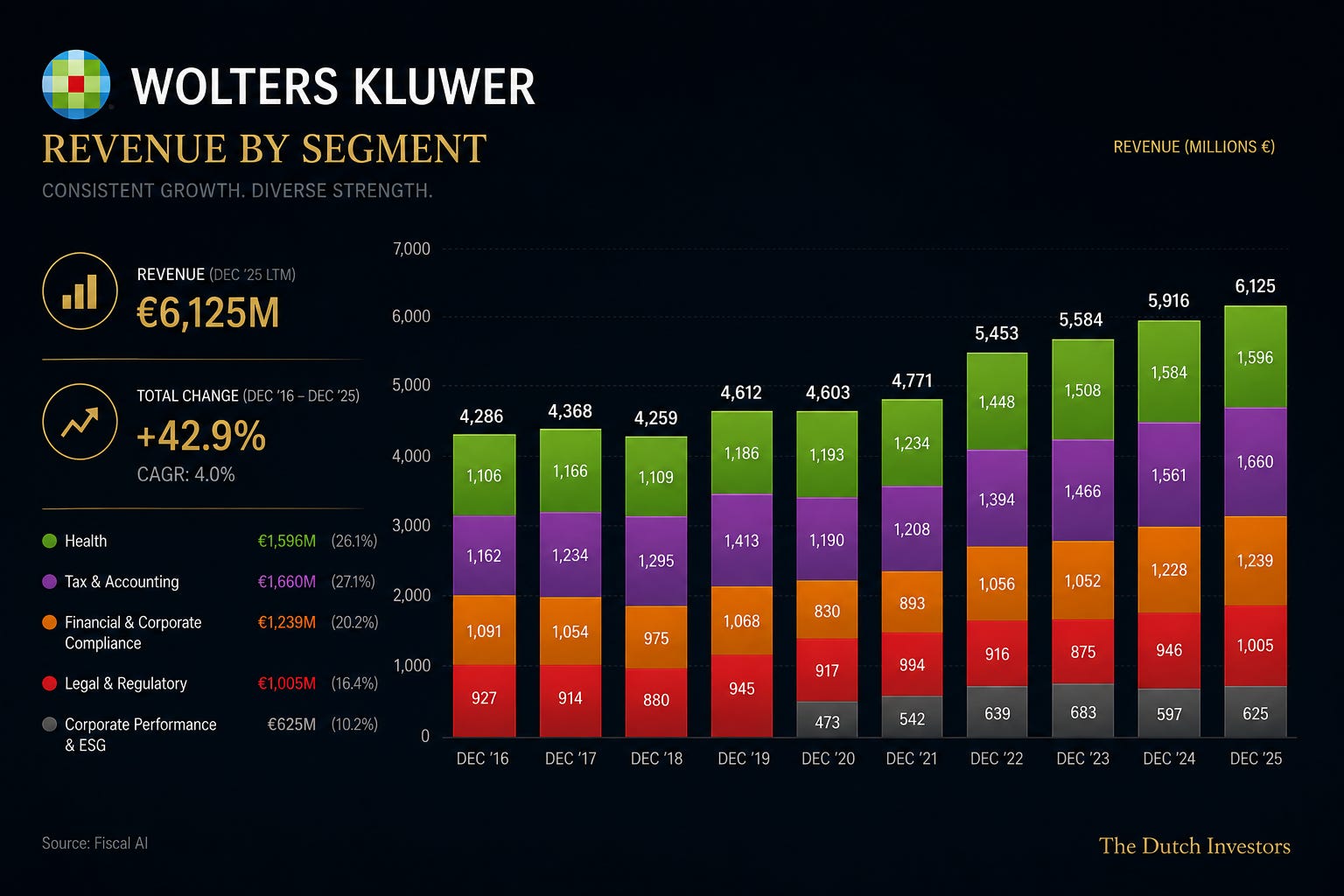
The interesting part of Wolters Kluwer’s business model is the fact that it’s a market leader in its niche markets, giving them significant switching costs. We do know that Wolters Kluwer’s corporate compliance and legal business segment reported retention rates of over 90% in the past. We also know that the company was barely affected during difficult periods, such as during the COVID-19 virus.
Boring, stable, sticky, and financially superb. That’s Wolters Kluwer in five words. There is not much to dislike. WK offers critical software and services to professional verticals that are exposed to regulatory and legal pressure. Without Wolters Kluwer, its customers could get reputational damage, lawsuits, or fines. The SaaS solutions of Wolters Kluwer in places like accounting, finances, and ESG integrate software with the work processes of customers.
Valuation & Ending Thoughts
Wolters Kluwer’s revenue is clearly slowing, but its profits are increasing. We expect them to concentrate more on R&D, capital allocation, and creating shareholder value in this way. Even in a conservative scenario, returns should be reasonable, with a current dividend yield of around 3.6% and annual buybacks of 2-3%.
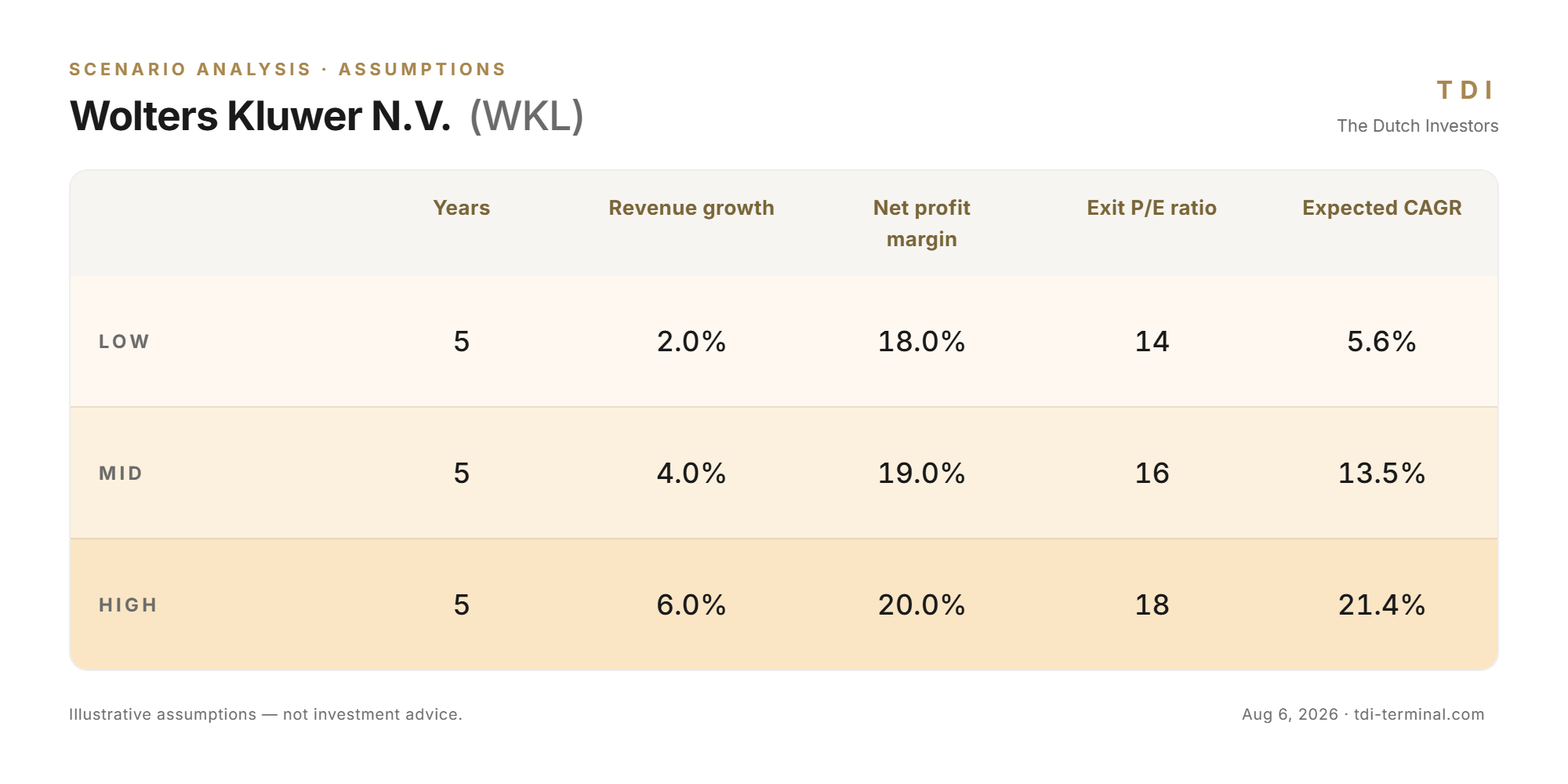
AI may even prove beneficial in the long run. The jury is still out on that.

Closing Thoughts
You shouldn’t take this as a list of stocks to buy. They’re here to spark your interest and as a starting point.
What they have in common is that they’re run by competent managers in businesses protected by something durable, whether it be software switching costs, deep customer communities, or regulatory workflow lock-in.
The European market is full of companies like this, and they are easy to overlook if you only look where everyone else is already looking.
This is what we do at The Dutch Investors.
For subscribers at Hidden Gems Investing only, we have set up a 40% lifetime discount if you use the code “GEMS40” on checkout. This price is grandfathered in, meaning we’ll never raise prices for locked in members.
Have a wonderful day and remember: stay curious, keep learning, and happy investing.
This article is for informational purposes only and is not investment advice. Read important disclosures here.
Thanks, Chris. Fun to see Wolters Kluwer on here. I built a now full position beginning last December.
I am almost a little embarrassed to admit it (given the valuations), but I bought Games Workshop during the little mini dip they had earlier this year. The return has been decent, but mainly it's a fun company to keep up with. The annual reports alone are also gold. There is no corporate BS, just a good buisness compounding away.